

What does this standard apply to?
The EU standard EN 13155 for the manufacture of loose lifting accessories has been in force since 1 January 2004. This standard is intended to provide a standardised minimum level of operational safety for loose lifting accessories. This means that all loose lifting accessories placed on the market after 1 January 2004 must comply with this standard.
A vacuum lifter on a crane hook is a so-called loose load handling attachment. This standard therefore only applies to attachments that can be suspended from a crane hook or similar. This standard and the required safety standard do not apply to vacuum lifters that are permanently connected to a lifting system or trolley and are an integral part of this machine. Trolleys with a lifting device, such as so-called glass robots, do not have to fulfil this safety standard. However, this statement should be viewed with caution. Anyone transporting only a simple pane of glass with such a device should take a look at EU standard EN 13035 Parts 1 & 2. The latest draft of this standard also requires compliance with EN 13155 for such machines.
But why is this standard so important, even for older vacuum lifters that are already in use?
Quite simply, in Germany there is the Ordinance on Industrial Safety and Health from 01/06/2015, that require retrofitting to the current safety standard (State of the art) demands. And this Ordinance on Industrial Safety and Health is aimed at the operator and not the manufacturer.
Why is the standard so important?
What is „state of the art“?
The EU standard describes the state of the art, or rather forms the basis for it. Therefore, if the vacuum lifter is to comply with the state of the art, it must at least fulfil the corresponding standard from 2004. So remember, there is no longer any such thing as "grandfathering". This standard should at least be observed by the vacuum lifter so that the person responsible can sleep peacefully. Otherwise, a violation of the Industrial Safety Ordinance is present. In the event of damage, the person responsible must expect corresponding claims!
That's why we check the vacuum lifters during maintenance precisely according to these features from the EU standard EN 13155, so that you work with a safe vacuum lifter. This prevents accidents at work.
This sometimes leads to incomprehensible reactions, because what was considered good years ago can no longer fulfil the requirements today. And not every inspector has the same perspective on these things. This is why you will find a basis for self-assessment of the situation here.
What needs to be taken into account?
Our translation of the individual points now follows:
5.2.2.1 - (the text of the standard can be found in the current version of EN 13155):
The device must be able to hold twice the nominal load in every possible position at the start of the working range.
- Example: According to the manufacturer, the appliance has a load capacity of 500 kg, but it must be able to hold 1000 kg if it complies with the standard.
5.2.2.2 - (the text of the standard can be found in the current version of EN 13155):
A vacuum lifter with vacuum pump / injector requires a control vacuum gauge.
The work area and danger zone must be labelled.
This applies to each individual vacuum circuit.
What is often not seen: For vacuum lifters with an injector on each suction cup, each suction cup forms its own vacuum circuit and must fulfil this requirement.
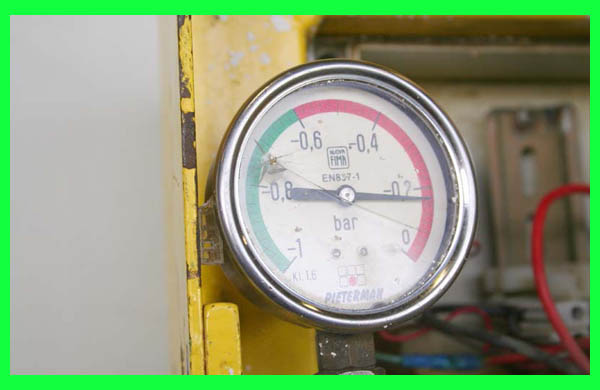
5.2.2.3 - (the text of the standard can be found in the current version of EN 13155):
This section concerns self-priming vacuum lifters and is not covered here.
5.2.2.4 - (the text of the standard can be found in the current version of EN 13155):
The control vacuum gauge should always be visible to the operator or crane driver. A requirement that is usually not met because this is sometimes simply impossible in practice.
Imagine how the crane operator should always have the control vacuum gauge in view on the way up a multi-storey building. Or, in the case of a turning device, the vacuum gauge may be covered by the suspension rod.
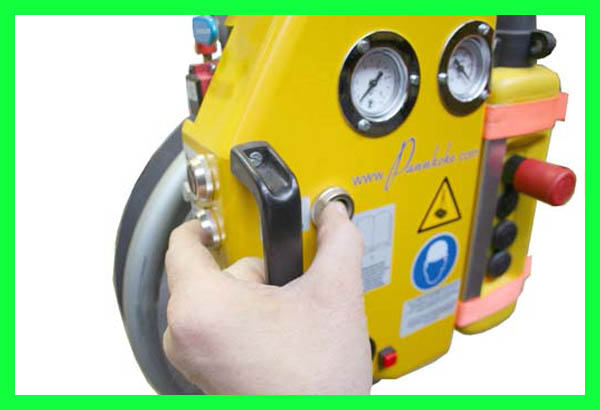
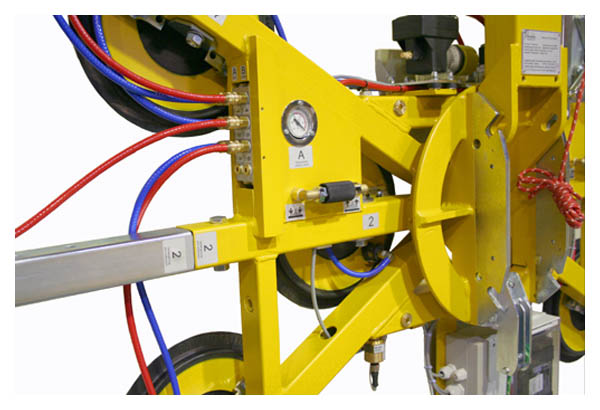
5.2.2.5 - (the text of the standard can be found in the current version of EN 13155):
a) Vacuum lifters with a vacuum pump should be equipped with a vacuum reservoir that can compensate for vacuum losses. For this purpose, the vacuum reservoir should be equipped with a non-return valve that maintains the vacuum if the vacuum generation fails.
b) Vacuum lifters with an injector should be equipped with a compressed air reservoir or a vacuum reservoir that can compensate for vacuum losses.
For this purpose, the vacuum reservoir should be equipped with a non-return valve that maintains the vacuum if the vacuum generation fails.
Or a compressed air reservoir supplies the appliance with sufficient compressed air to maintain the load for at least 5 minutes.
- c) and d) are not considered in more detail here.
Even if this requirement with the tank does not provide much security, in any case, the power failure should not cause the load to detach from the vacuum lifter. This is a very important function, even if it means that vacuum equalisation cannot take place.
There must therefore be a non-return valve or similar!
What is often not seen: For vacuum lifters with an injector on each suction cup, each suction cup forms its own vacuum circuit and must fulfil this requirement.
5.2.2.6 - (the text of the standard can be found in the current version of EN 13155):
A control vacuum gauge alone is not enough, there must also be an optical or acoustic warning signal that indicates a danger due to insufficient vacuum!
This always requires an additional vacuum switch that triggers the signal.
It is important that this warning signal also works in the event of a power failure or the warning is already triggered by the power failure.
What is often not seen: For vacuum lifters with an injector on each suction cup, each suction cup forms its own vacuum circuit and must fulfil this requirement.
5.2.2.7 - (the text of the standard can be found in the current version of EN 13155):
This requirement is very clear. The vacuum lifter must be able to hold the load for 5 minutes if the power fails. This applies to normal applications where an employee is in the vicinity and the work area is not specially secured.
The only point that is not defined is the weight of the load. Is it the nominal load or 2 times the nominal load?
5.2.2.8 - (the text of the standard can be found in the current version of EN 13155):
On construction sites or in confined spaces in production, where people cannot easily move out of the danger zone, the following applies Increased safety requirements.
The possibility of a second positive-locking holding device is actually not possible, as this would have to be present from the beginning to the end of the movement and be attached before lifting and only removed after setting down.
A vacuum lifting device with several vacuum circuits is now required. It must still be able to hold twice the nominal load if one vacuum circuit fails!
5.2.2.9 - (the text of the standard can be found in the current version of EN 13155):
Switching to the RELEASE state may only be carried out with a 2-fold actuation.
Simple actuation, for example pressing a button, moving a hand lever, etc., is not permitted!
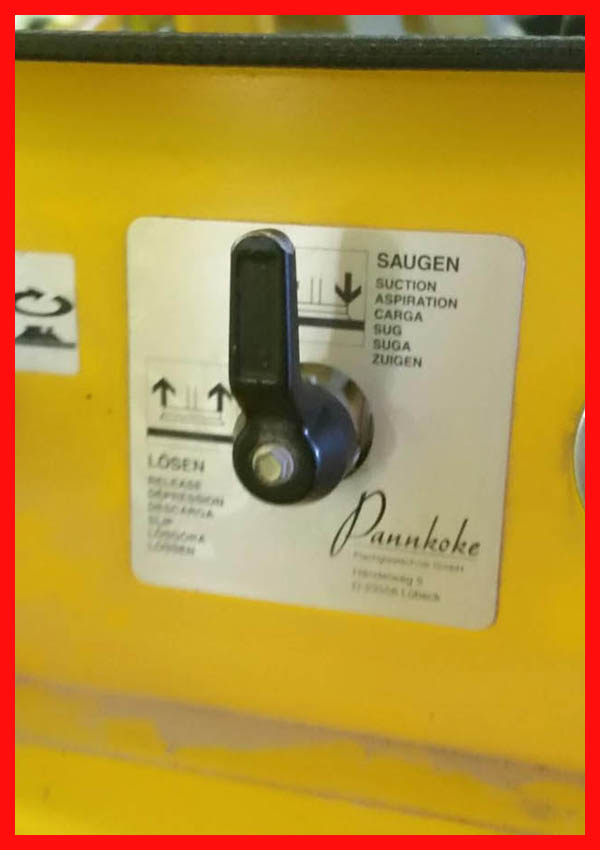
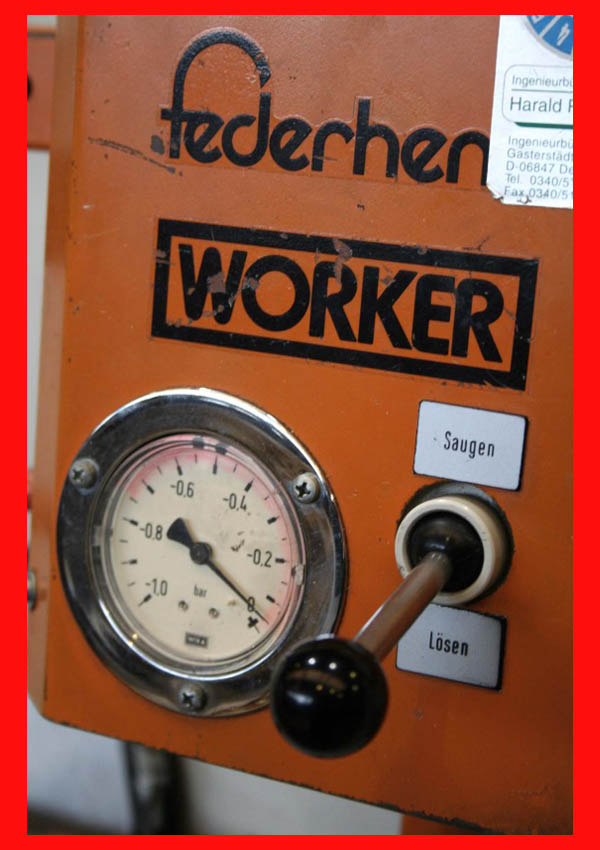
Pressing 2 buttons at the same time or operating a manual valve with 2 movement sequences is permitted!
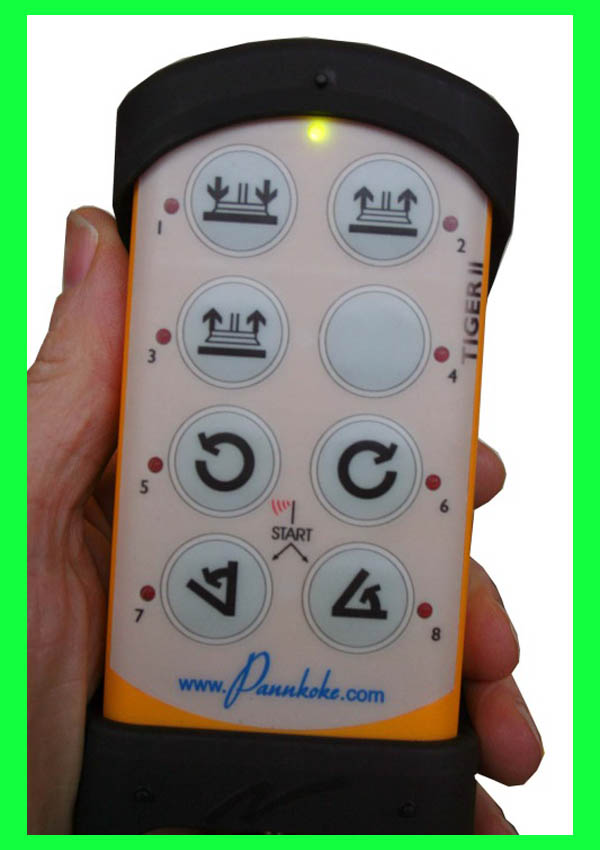
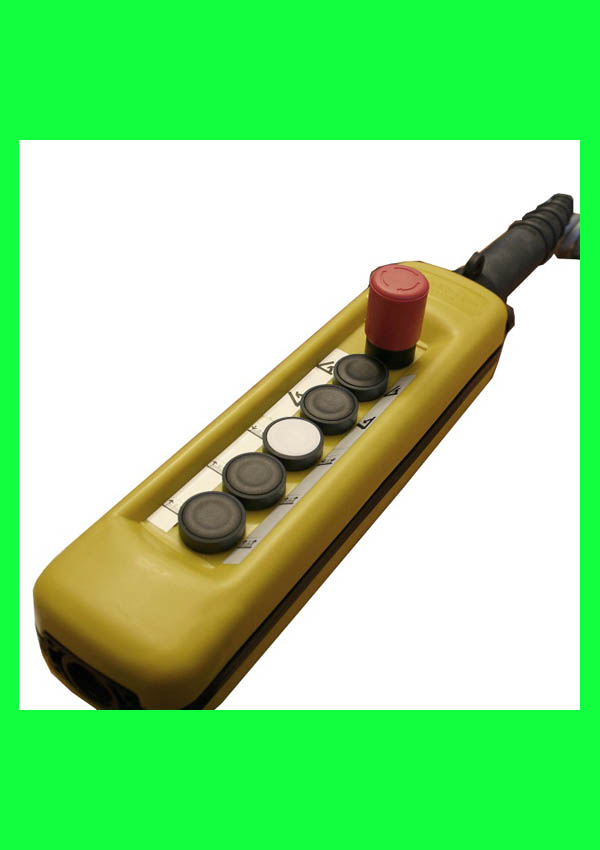
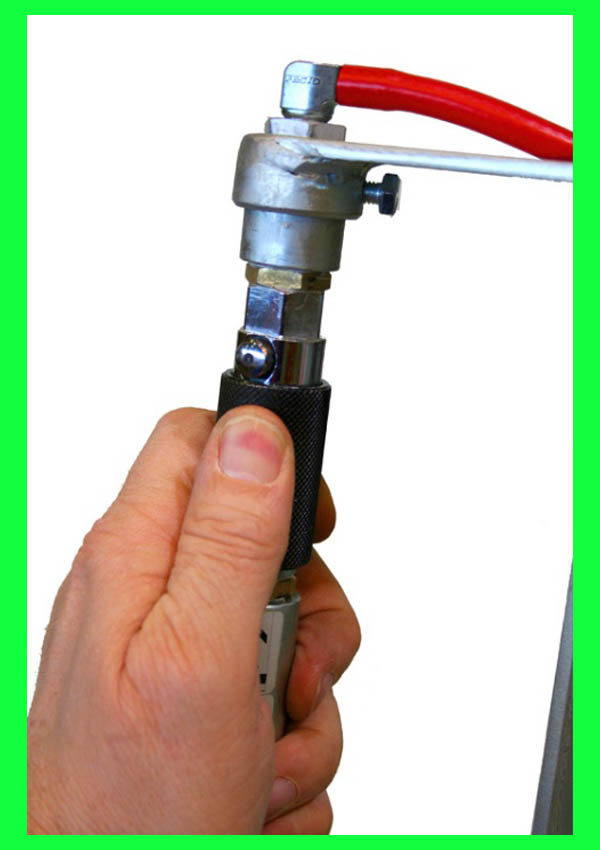
5.2.2.10 - (the text of the standard can be found in the current version of EN 13155):
The controls for rotating and swivelling movements must not be used without express consent. Such movements may only be executed when a button is pressed or similar.
Manual latches must be actively released and re-engage automatically.
Moving a valve lever, switching a switch, releasing a mechanical lock and so on is not permitted!
Pressing a button during a power-operated movement is permitted!
It is permissible to pull a rope or press a hand lever to release a mechanical lock, which engages again automatically when released!
Our advice
- Check your vacuum lifters for the points listed above.
- Retrofit old appliances accordingly.
- Never forget the type plate, this is also important! Is it present? Is the data correct? Is the manufacturer's address noted in the EU? Is the corresponding declaration of conformity available?
- Our offer, we check your device and give you appropriate tips. If you wish, we can also train your employees at your premises. This way you can prevent accidents at work.
It's about your safety and that of your fellow human beings.