

Converting vacuum lifting devices and then - who is the manufacturer in terms of the Machinery Directive?
The person who places the appliance/machine on the market for the first time in the EU and imports it into the EU is the manufacturer within the meaning of the Machinery Directive.
However, the person who carries out a safety-related modification to the appliance/machine then also becomes the manufacturer of the appliance/machine, with the new product characteristics in full. Did you know that?
What is a safety-related modification to a vacuum lifting device?
The conversion from a 1-circuit vacuum lifting device to a 2-circuit vacuum lifting device is without question a safety-related modification that fulfils this condition.
However, the replacement of suction cups also represents a safety-related change for us if they do not have the same technical properties.
Here you can see a few examples of converted 1-circuit vacuum lifters:
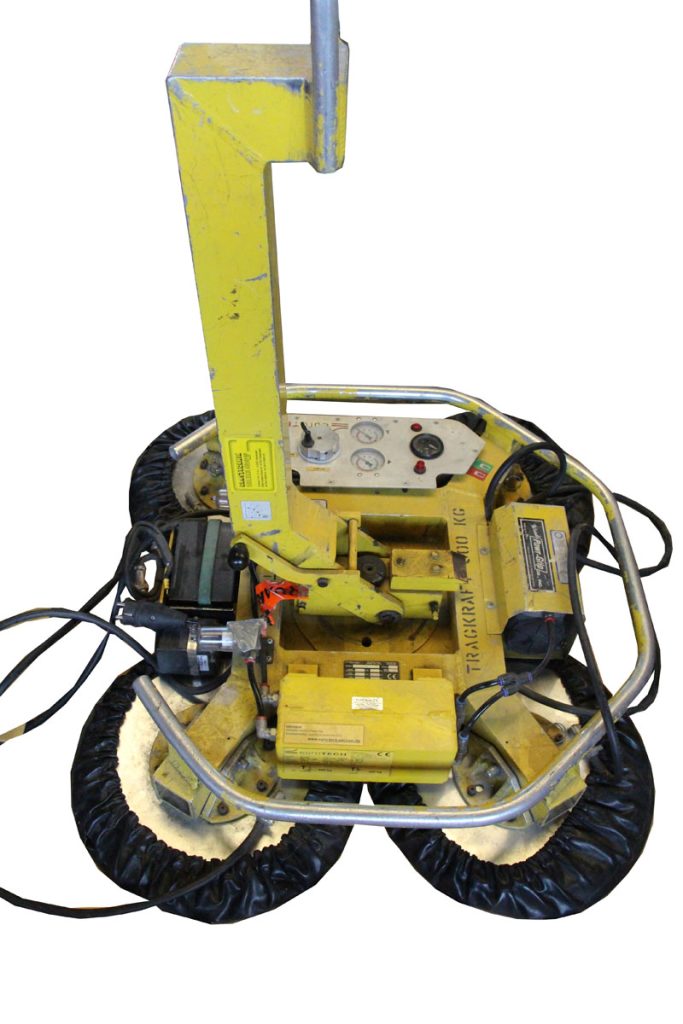
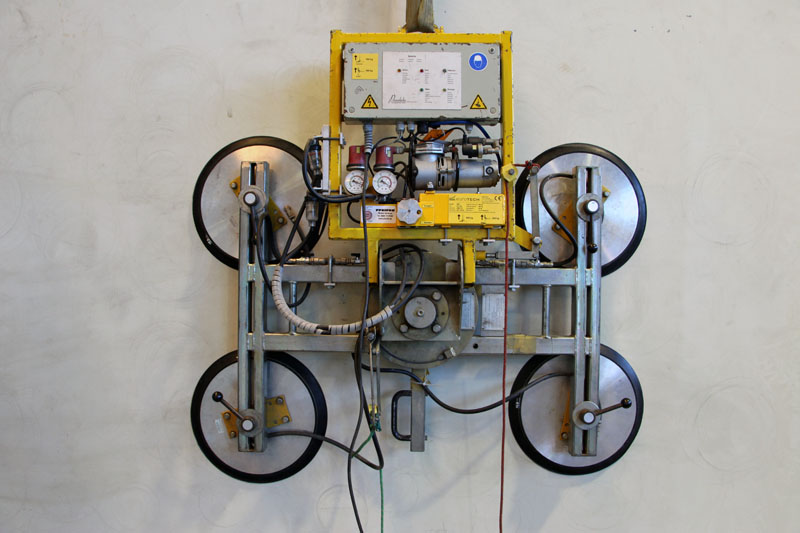
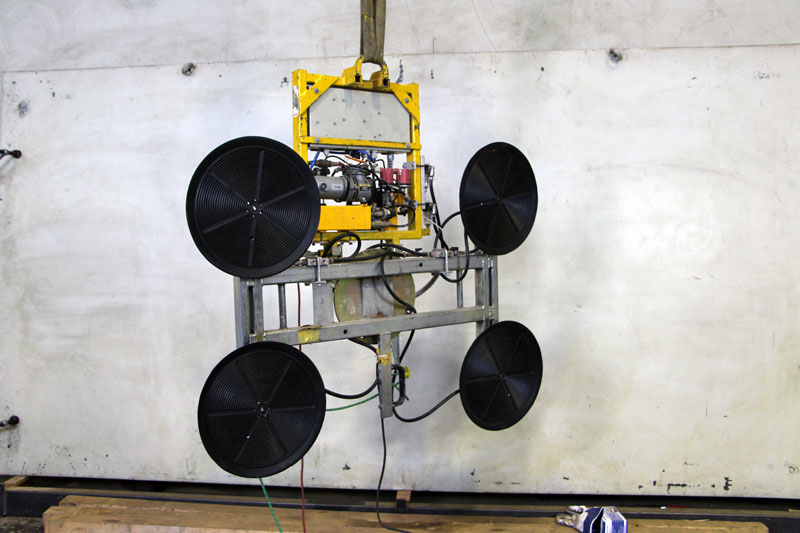
What are the consequences of this?
There is no longer an EU Declaration of Conformity for the converted appliance/machine, the original CE mark is invalid, the operating instructions are no longer valid and EU conformity must be redetermined and then certified accordingly by the person who converted the appliance/machine, and in full. This is because after the conversion, an appliance/machine with new product characteristics is placed on the market again. Accordingly, the labelling on the appliance/machine must also be changed.
Which information should apply now?
Here are two bad examples of the conversion of a vacuum lifting device.
What applies here? 500 kg in all directions or only the 360 kg in the vertical direction. Which CE mark applies? The one from Eurotech or the one from Woods.
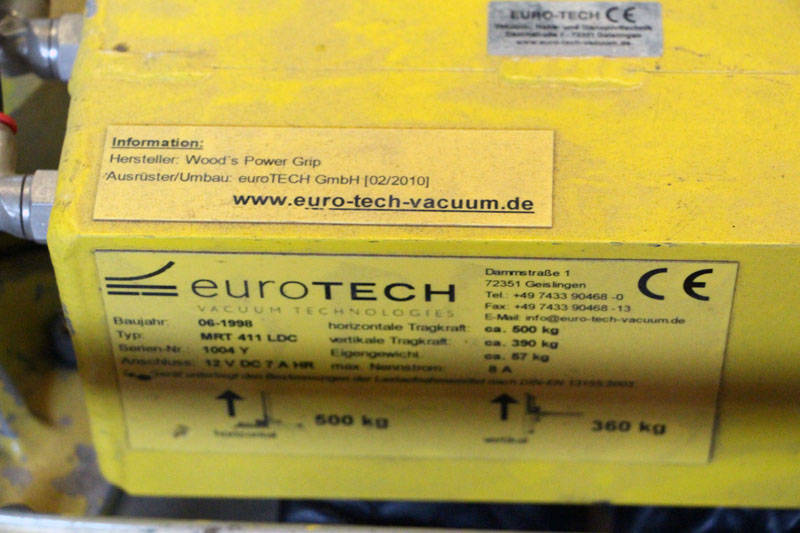
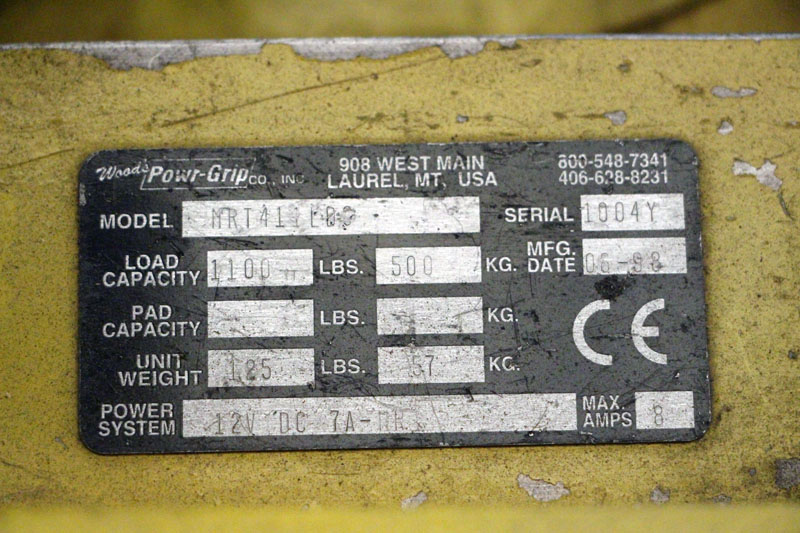
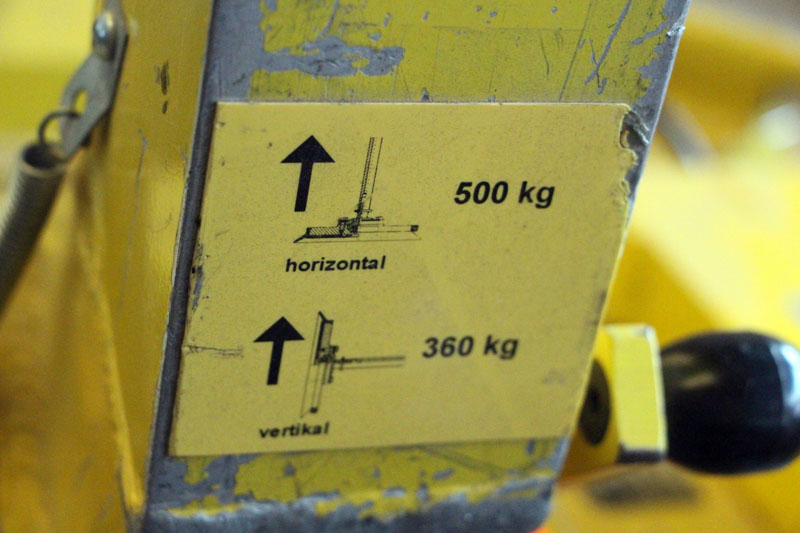
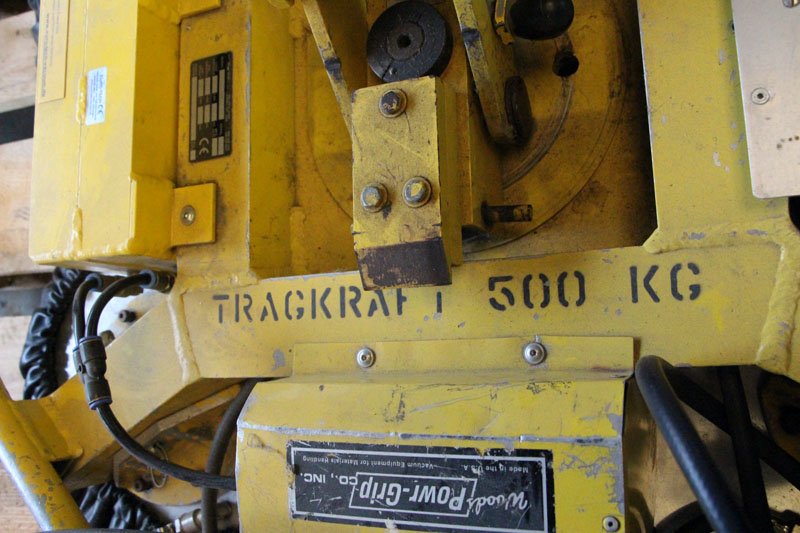
The CE mark from Woods would not apply in the EU, as the USA is outside the EU. The importer who imported the device into the EU should actually be stated here. In any case, the claim that Woods is still the manufacturer of the converted appliance is false. Eurotech has become the manufacturer and distributor as a result of the conversion. Eurotech is now fully responsible for the converted vacuum lifting device.
Example
What applies here? 400 kg in all directions or only the 360 kg in the vertical direction. Which CE mark applies? The one from Eurotech or the one from Pannkoke.
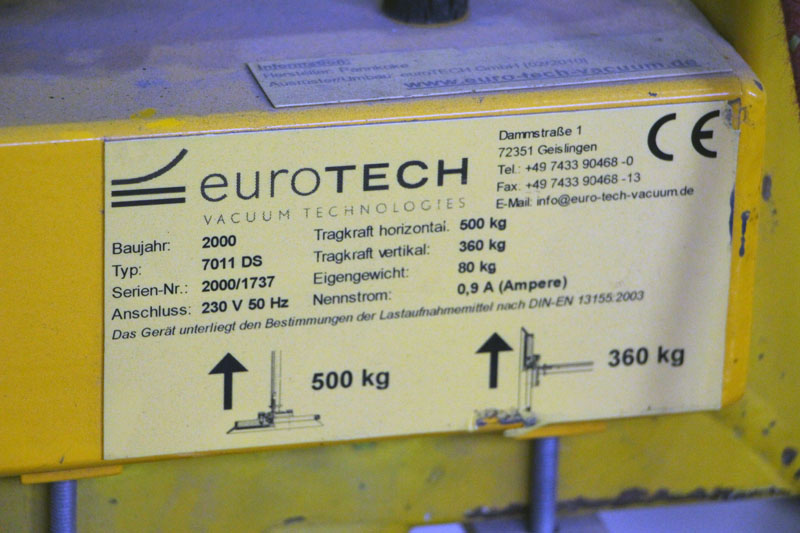
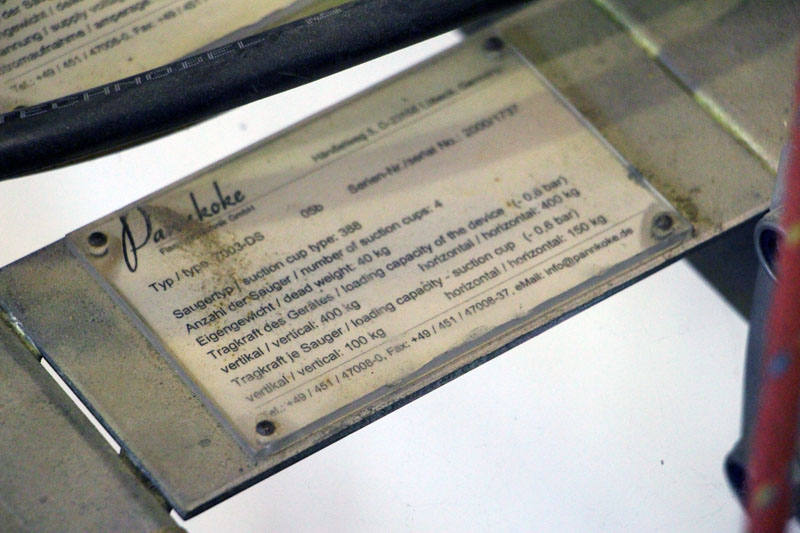
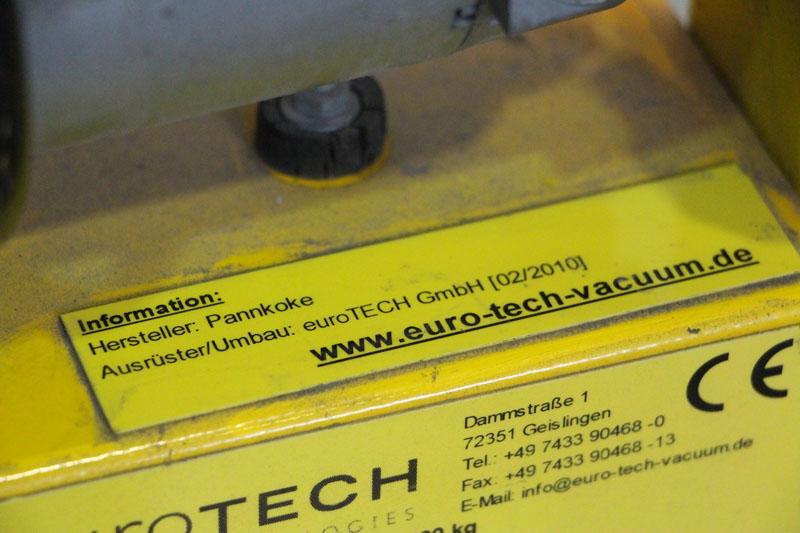
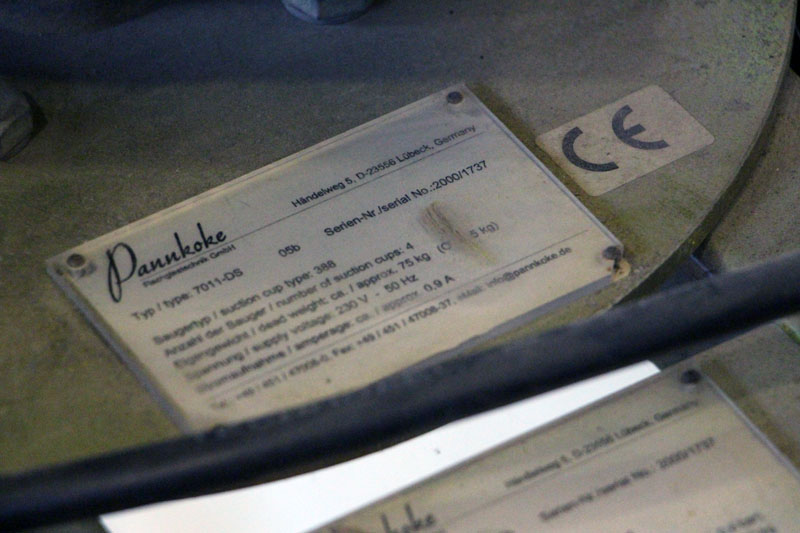
In any case, the claim that the Pannkoke company is still the manufacturer of the converted appliance is false. As a result of the conversion, Eurotech has become the manufacturer and distributor. Eurotech is now fully responsible for the converted vacuum lifting device.
How is a vacuum lifting device used in the glazing sector?
The majority of glazing work is carried out vertically. Who knows that the horizontally specified load-bearing capacity is exceeded at an inclination of just a few degrees? For safety reasons, those in the know then only calculate with the vertical load-bearing capacity. For the user, the information on the vacuum lifting device is of relatively little use.
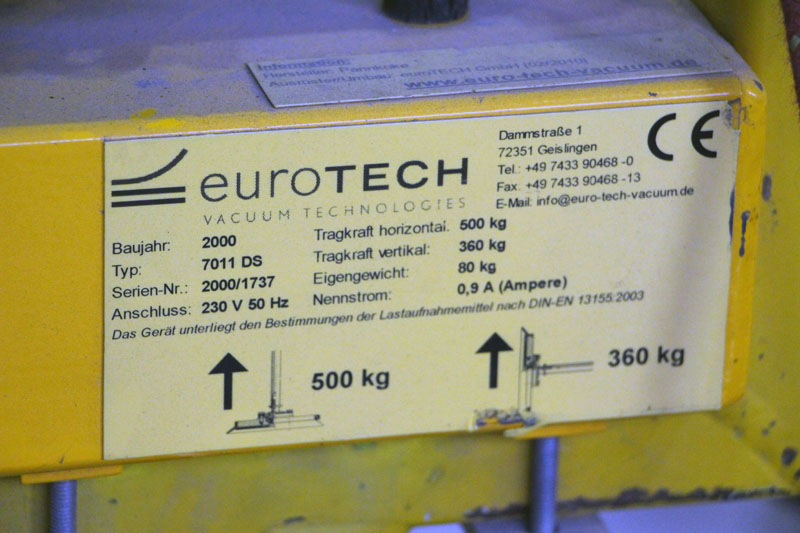
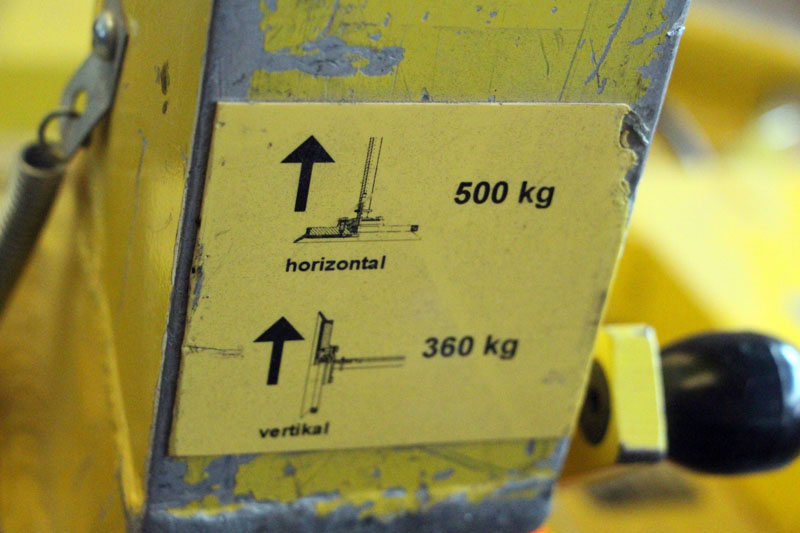
Somehow, in our eyes, this does not have much to do with practical use, but rather with the specification of a high load capacity, which does not materialise in practice. Something like this is more marketing than meaningful information on the vacuum lifting device.