

What can happen if the suction cup is incorrectly divided?
- Does the division of the suction cups mean anything with a 2-circuit vacuum lifter?
- What effects can it have if the distribution of the suction cups is changed?
- Is there anything to consider?
- Everything is fine. The load hangs on the vacuum lifter. Why should you worry about the suction cup distribution?
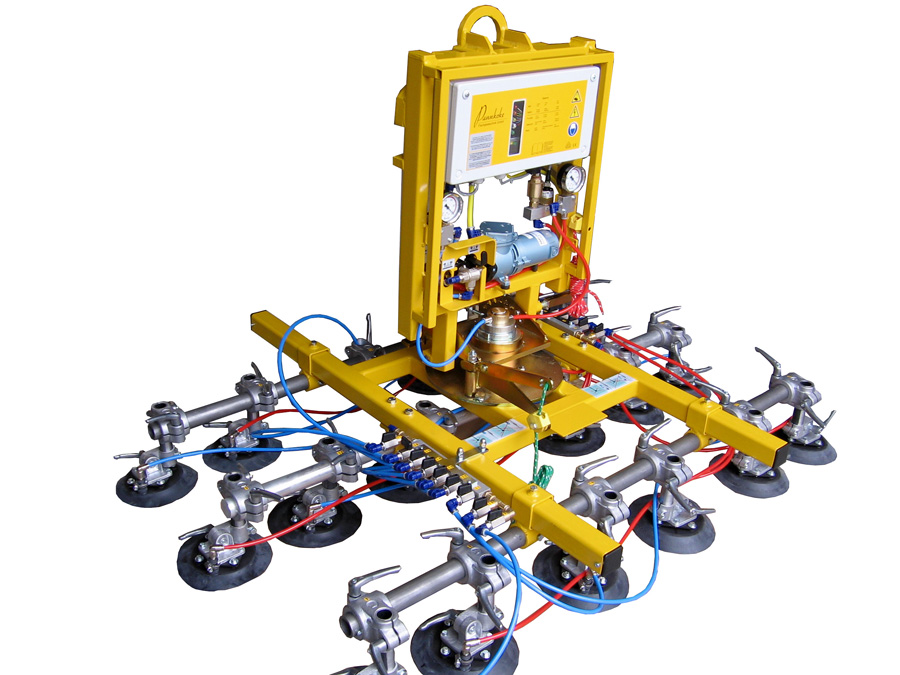
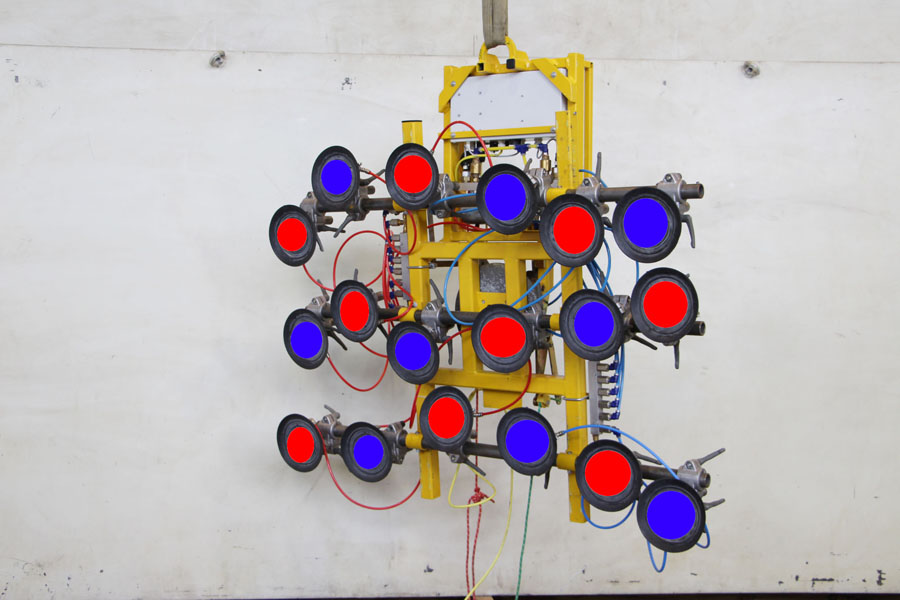
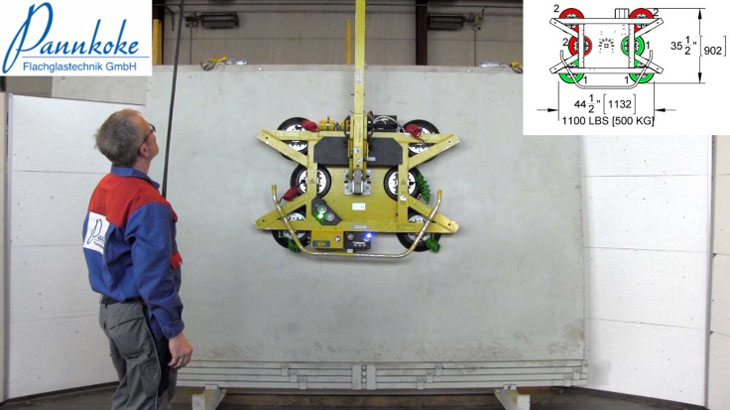
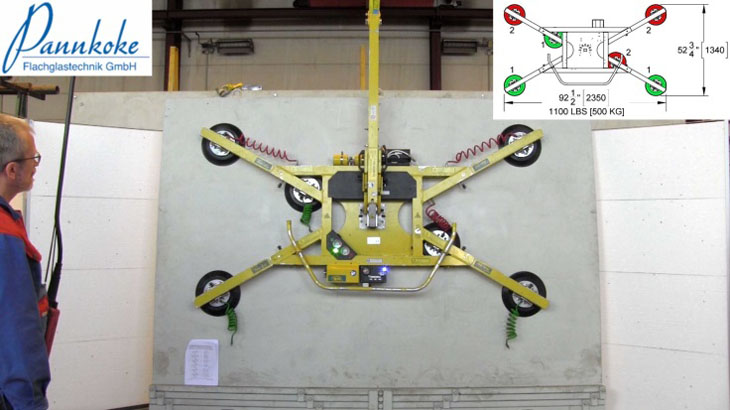
The vacuum circuits were distributed approximately evenly over the entire surface.
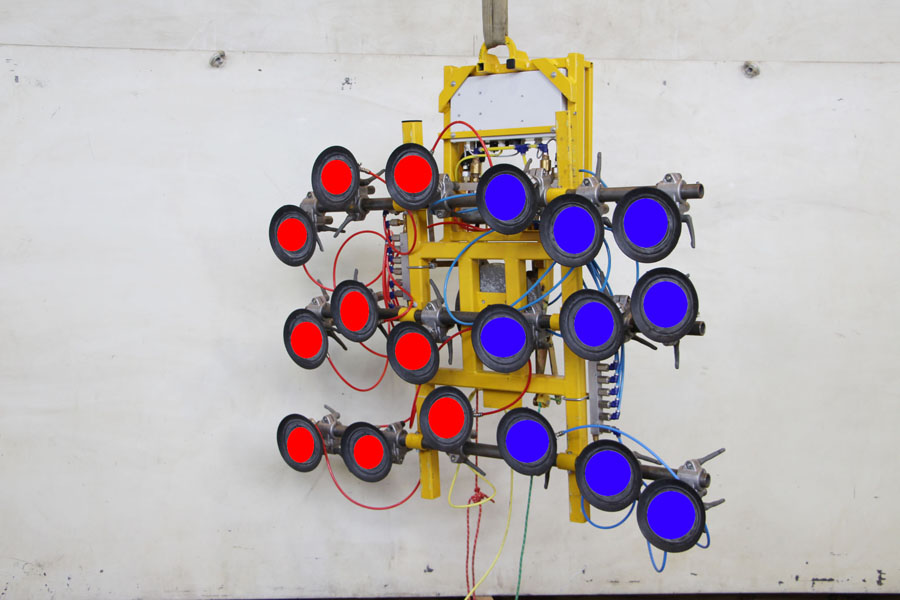
The right-hand side was one vacuum circuit and the left-hand side was the other vacuum circuit. This means that even load distribution is not possible!
Perhaps we should think about it again after all!
Even if everything worked without any problems, you should think about this application. Does the suction cup layout really not matter?
Why should a 2-circuit vacuum lifter be used on construction sites?
Each vacuum cup has a certain load capacity. If the vacuum cup is overloaded, it will detach from the transported goods. You should take this point into consideration.
It is not so easy to calculate how the loads are actually distributed between the individual suction cups. We will therefore now take a simplified look at this.
Why a 2-circuit device at all?
It is therefore assumed that it is not possible to ensure that loads are not lifted over people on construction sites. The vacuum lifter should therefore be safer. There should be two independent vacuum systems. Should one vacuum system fail, the remaining vacuum system should be able to hold the nominal load with twice the safety.
This means that if a device is designed for 500 kg and has two vacuum circuits, each vacuum circuit must also safely hold the test load of 1000 kg. According to our understanding of EU standard EN 13155, this must be guaranteed for at least 5 minutes in any position.
Can this still work with such a one-sided division of the vacuum circuits?
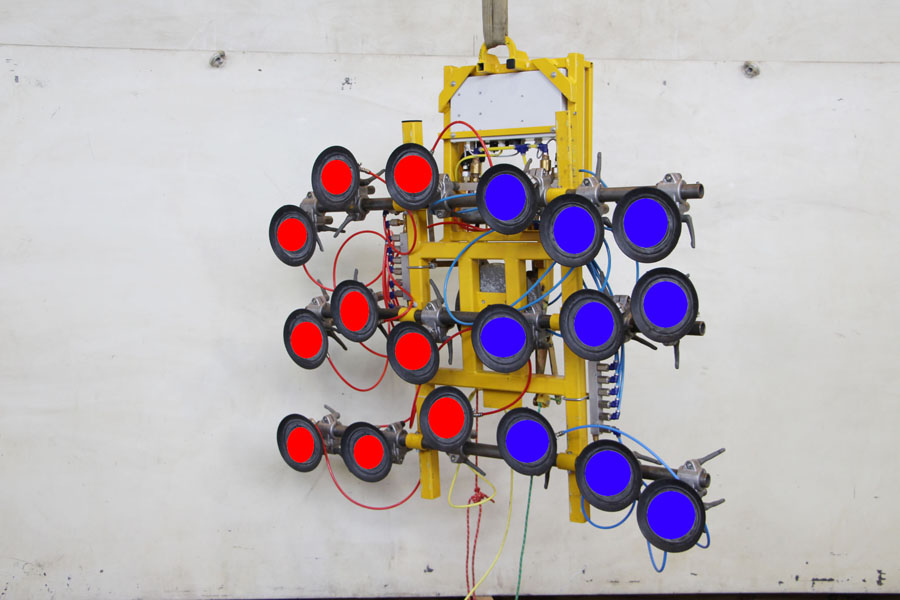
This will not work, as the suction cups not only have to absorb the pure weight load, but also a part of the weight load that acts on the suction cups via a lever arm.
Let's assume that the suctioned plate has an even weight distribution over the entire surface. If the plate has a length of 4 metres, a width of 2 metres and a weight of 500 kg, the load could be divided into 1 metre wide pieces. Each piece would then be assumed to weigh 125 kg, which would be applied to the centre of the metre piece.
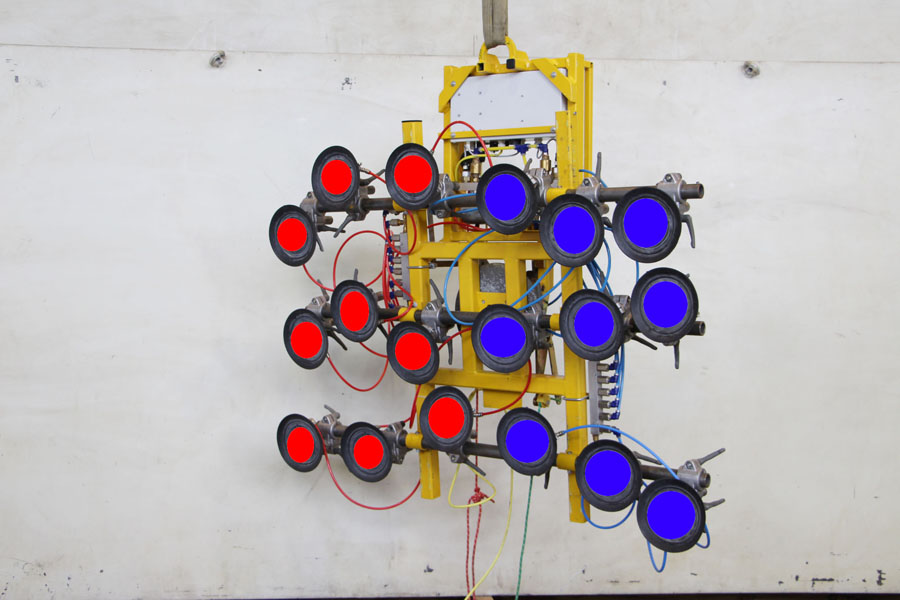
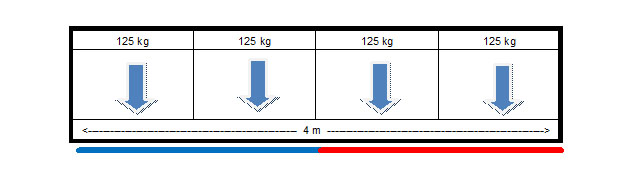
This means that the suction cups in the blue circle are subjected to a weight of approximately 250 kg, 125 kg with a lever arm of 1.5 metres and 125 kg with a lever arm of 2.5 metres.
As I said, this only occurs if one circuit fails and is hardly noticeable in normal use. However, a 2-circuit device like this should actually offer more safety if one vacuum circuit fails.
With the original suction cup layout, the forces to be absorbed are distributed more evenly over the entire suction cup frame. In any case, this is how the manufacturer should normally design it so that individual suction cups are not overloaded.
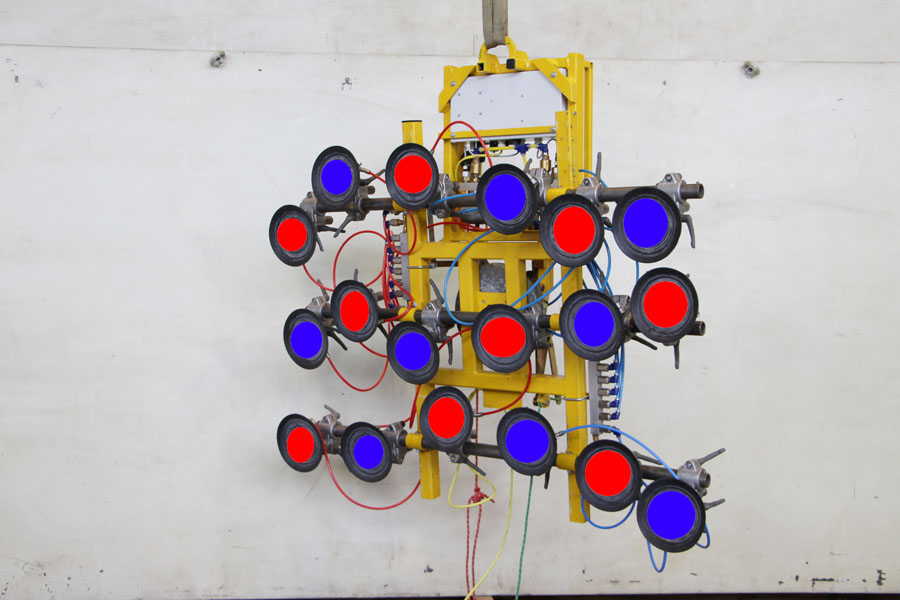
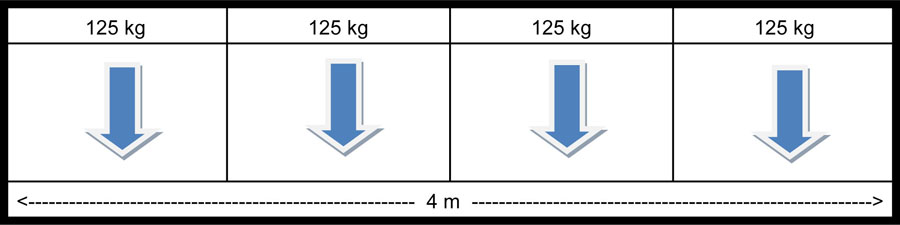
Therefore, never change this assignment on your own initiative if you do not want to change the appliance safety and thus relieve the manufacturer of its obligation.
If you want to see how this has really affected the vacuum lifter shown here during maintenance at our company, then take a look at this video. Perhaps what you see will convince you more than these words. https://www.youtube.com/embed/R8FAY4YlRbg?feature=oembed
If you are not yet familiar with the effects of a lifting arm, why not try it out for yourself?
Take a sledge hammer with a weight of 5 kg. Grasp the hammer handle directly behind the weight and stretch out your arm. This is generally quite easy. Now grasp the end of the hammer handle and try to bring the hammer into a horizontal line with your arm outstretched. Did you notice the difference?
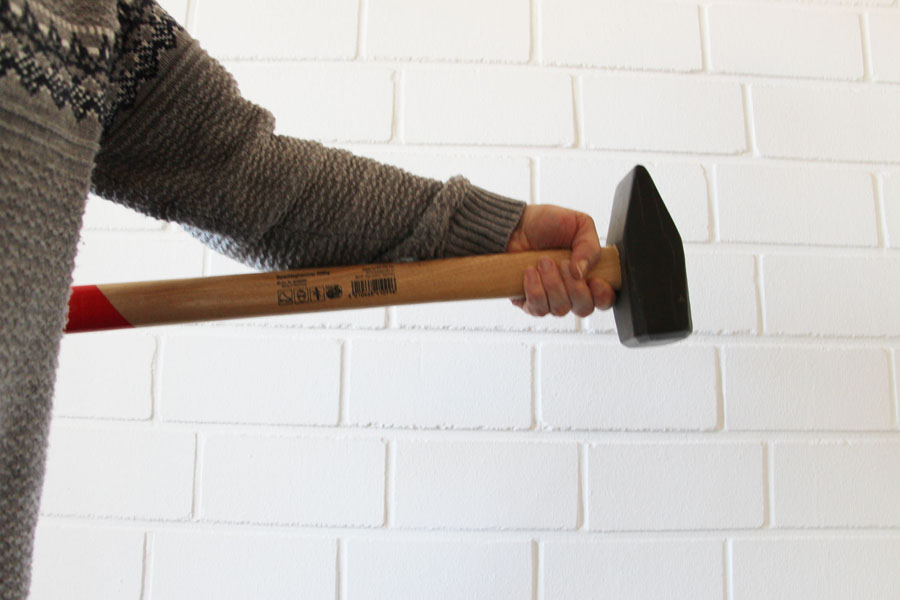
„Short hammer on an outstretched arm“
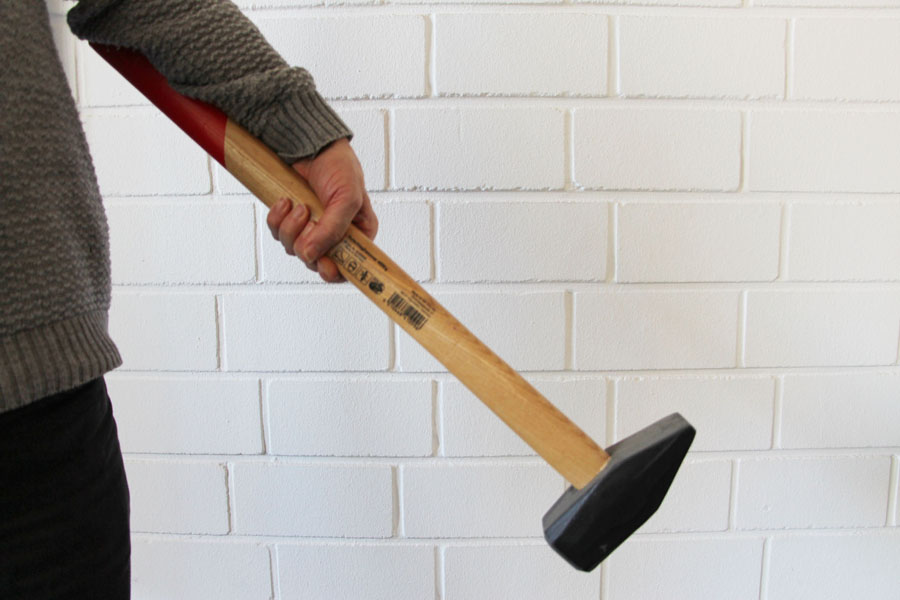
„Try to lift the hammer by holding the hammer handle in the centre with an outstretched arm“
This quickly and simply illustrates the effect of the lever arm.
However, there are also manufacturers of vacuum lifting devices who are not necessarily aware of the objective of a 2-circuit device or have not really considered this in the realisation. Therefore, you should also pay attention to this suction cup division when buying a vacuum lifter if you want a safe device.
Here is an example that we noticed during the maintenance of a vacuum lifter.
Results of the load test (with new suction cups)
Vertical load case
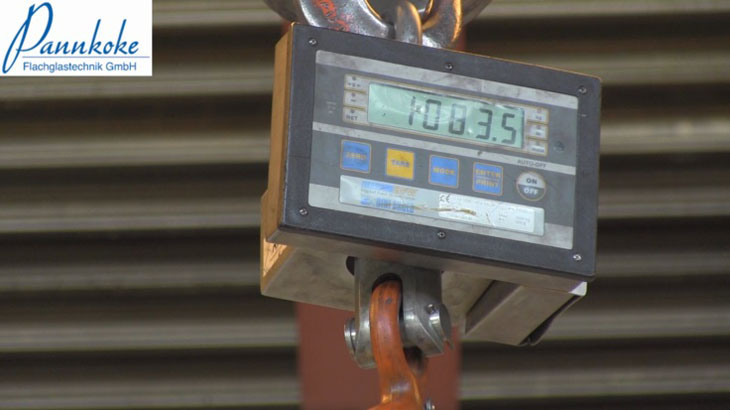
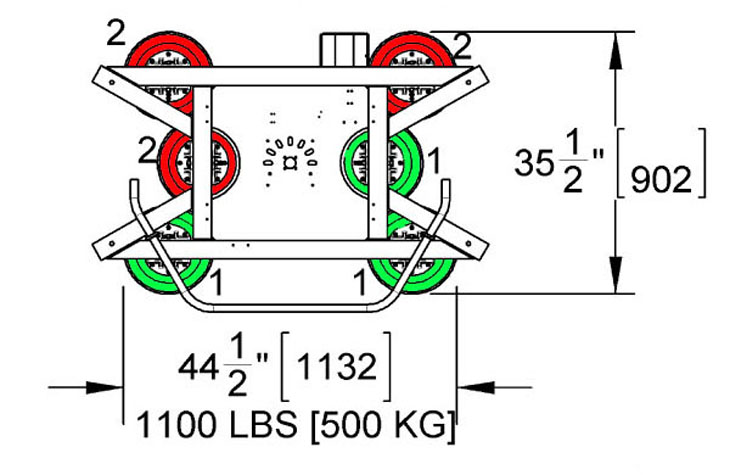 | In this configuration, 500 kg should be able to be moved. This means that a vacuum circuit should be able to hold 1000 kg. This is also achieved for the first few seconds, but with a downward trend in the first 60 seconds. |
 |  |
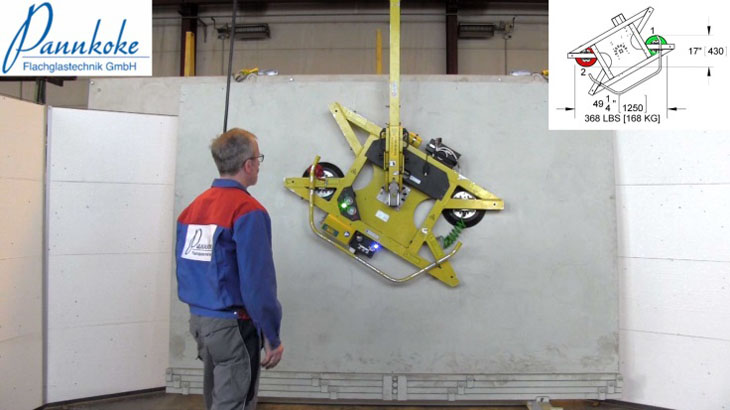
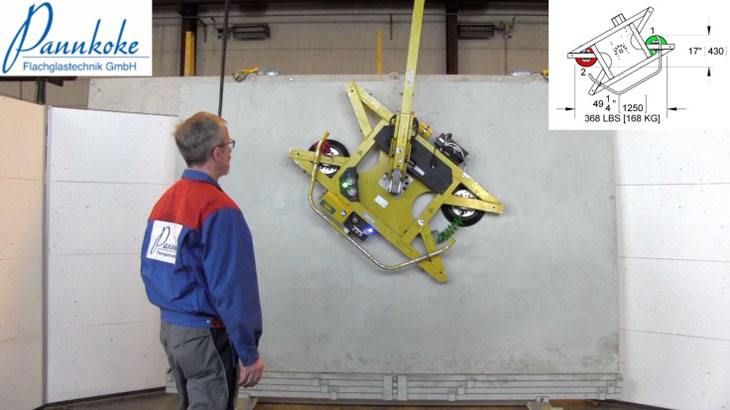
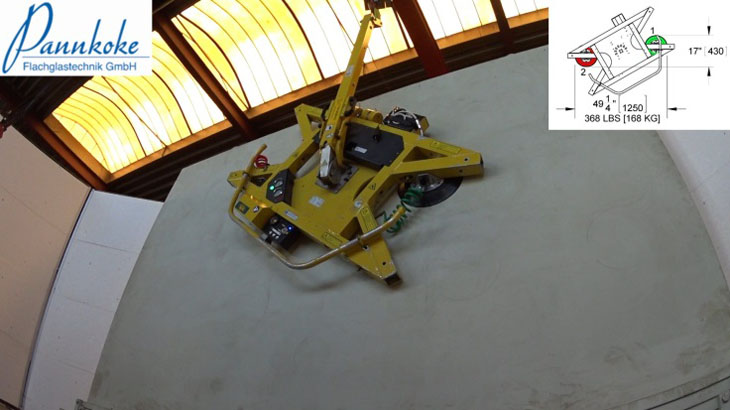
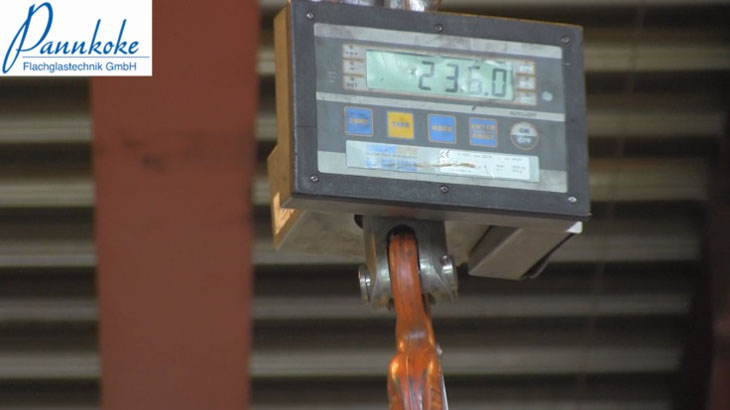
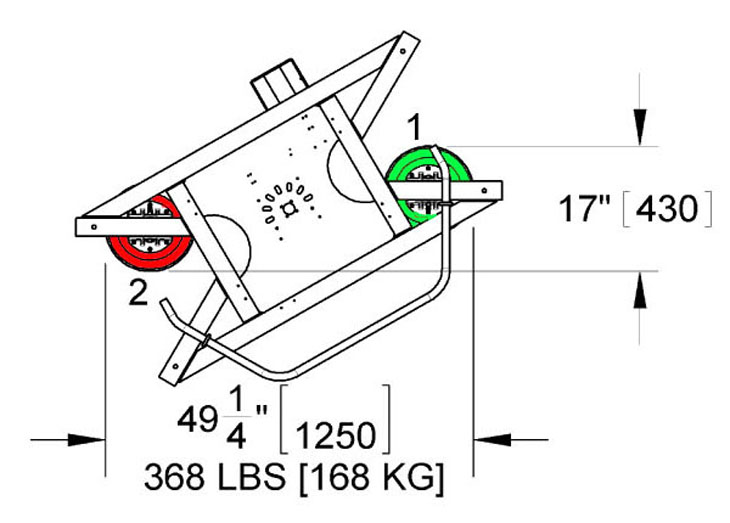 | In this configuration, 168 kg should be able to be moved. This means that a vacuum circuit must be able to hold 336 kg. This is not achieved. The appliance rotates around the suction cup. The crane scale displays 236 kg after the first few seconds. |
 |  |
 |  |
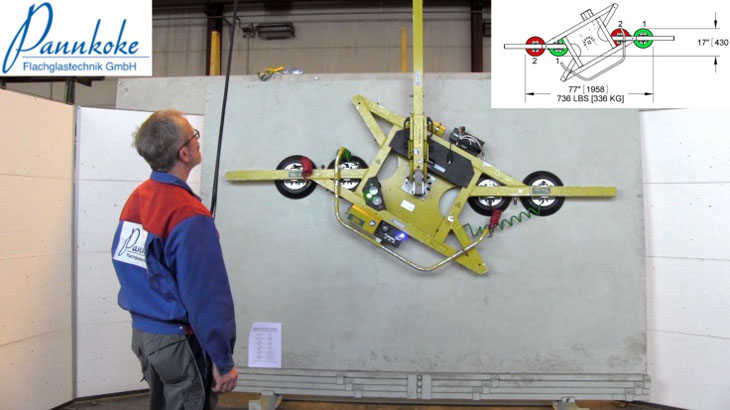
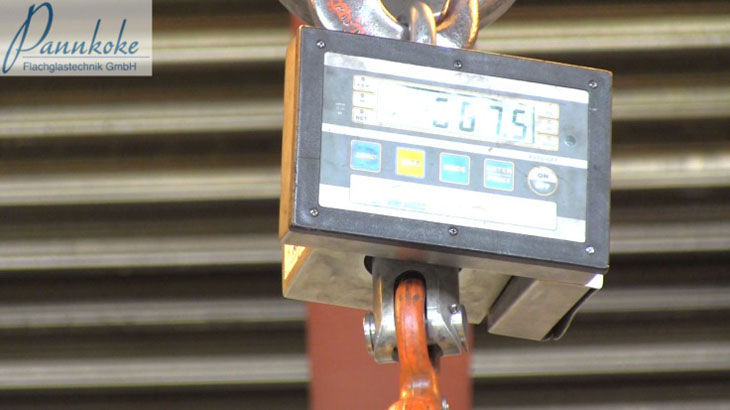
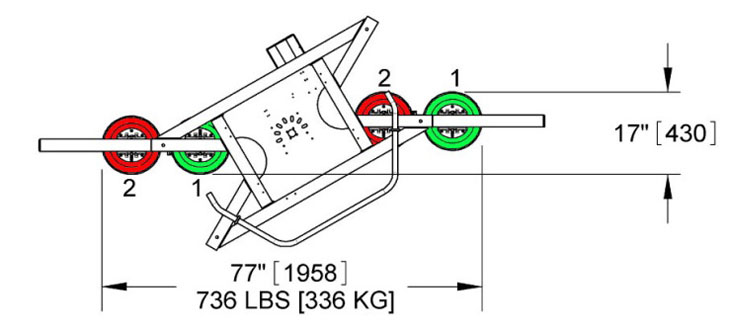 | In this configuration, 336 kg should be able to be moved. This means that a vacuum circuit must be able to hold 672 kg. This is also fulfilled for the first few seconds, but with a downward trend in the first 60 seconds. |
 |  |
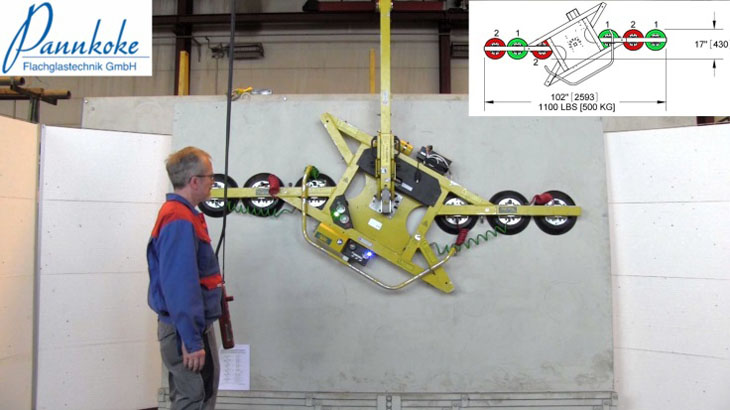
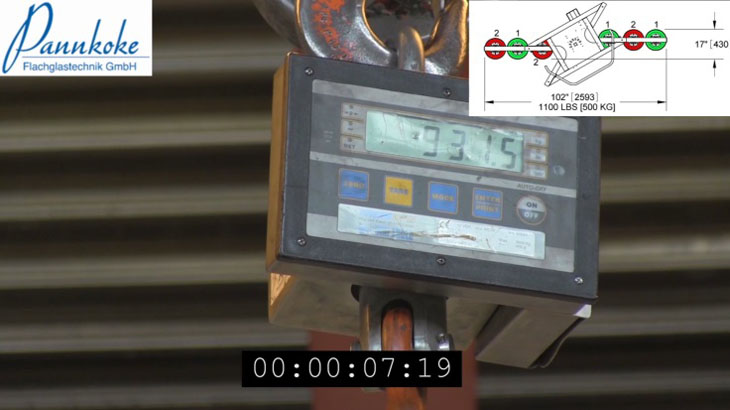
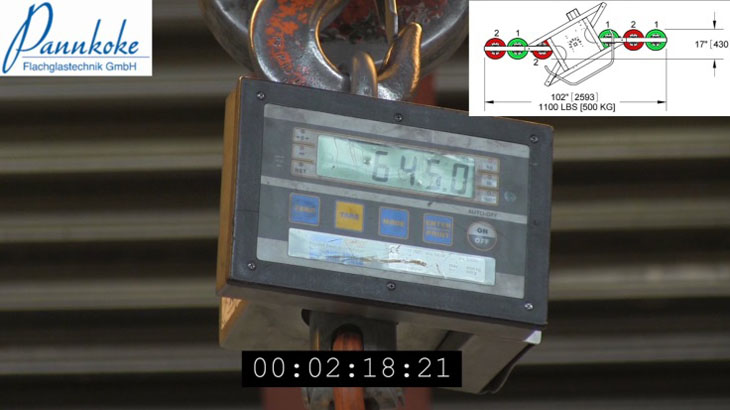
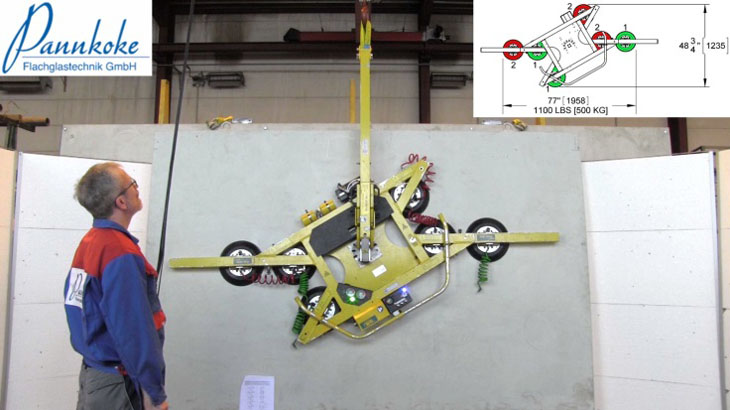
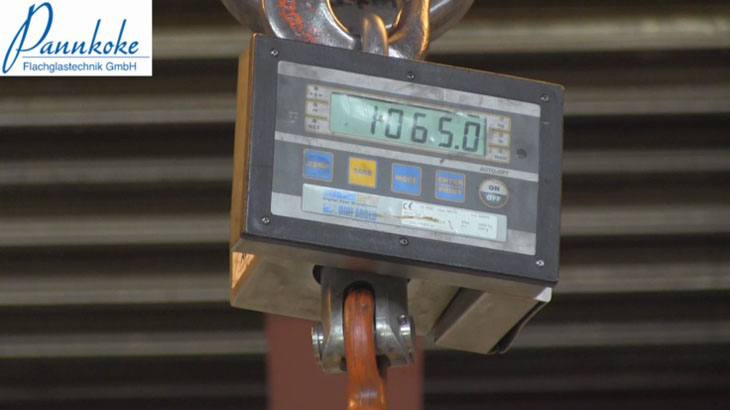
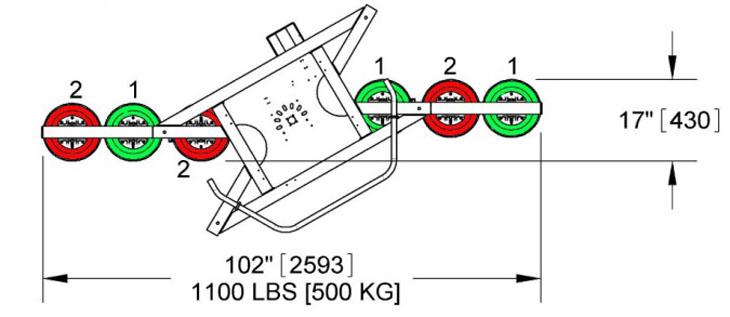 | In this configuration, 500 kg should be able to be moved. This means that a vacuum circuit must be able to hold 1000 kg. This is hardly achieved at the beginning. It starts at approx. 930 kg and then drops to 645 kg within 2 minutes and continues to fall. The test was cancelled after this time. |
 |  |
 |
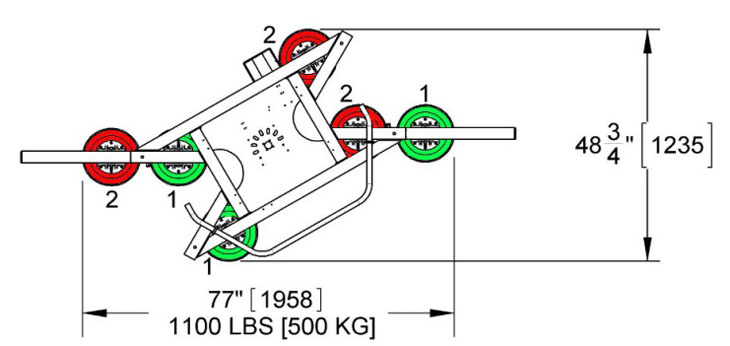 | In this configuration, 500 kg should be able to be moved. This means that a vacuum circuit must be able to hold 1000 kg. This is also fulfilled for the first few seconds, but with a downward trend in the first 60 seconds. |
 |  |
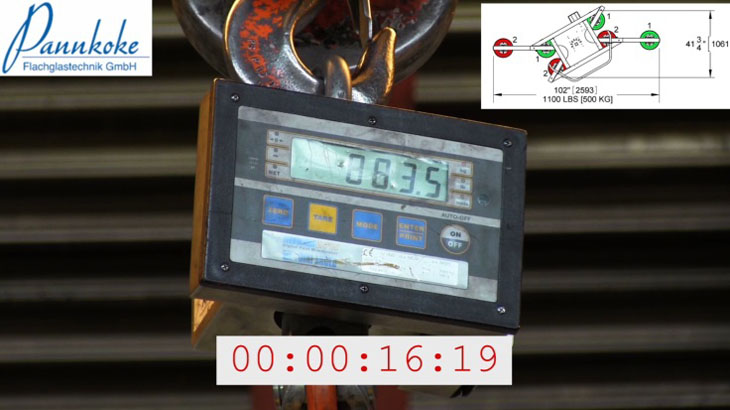
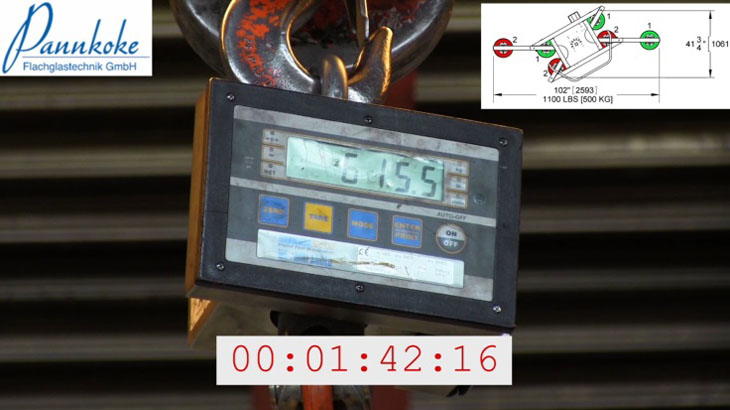
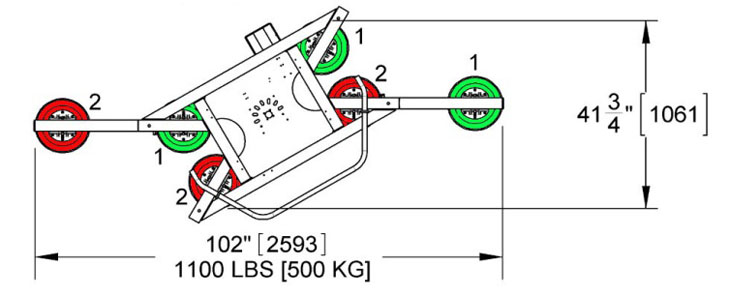 | In this configuration, 500 kg should be able to be moved. This means that a vacuum circuit must be able to hold 1000 kg. This is hardly achieved even at the beginning. It starts at approx. 860 kg and then drops to 615 kg within 1.7 minutes and continues to fall. The test was cancelled after this time. |
 |  |
 |
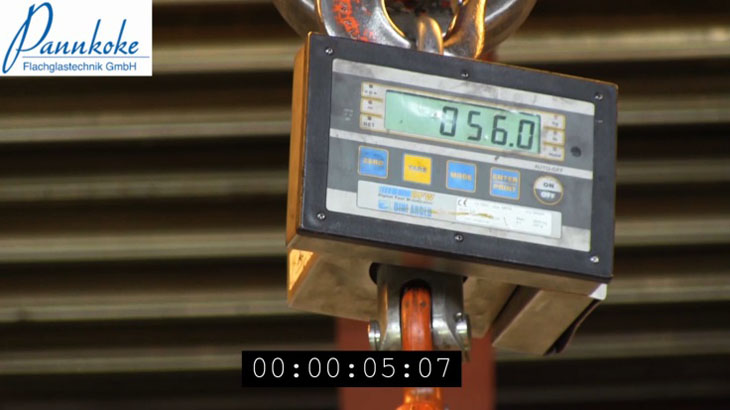
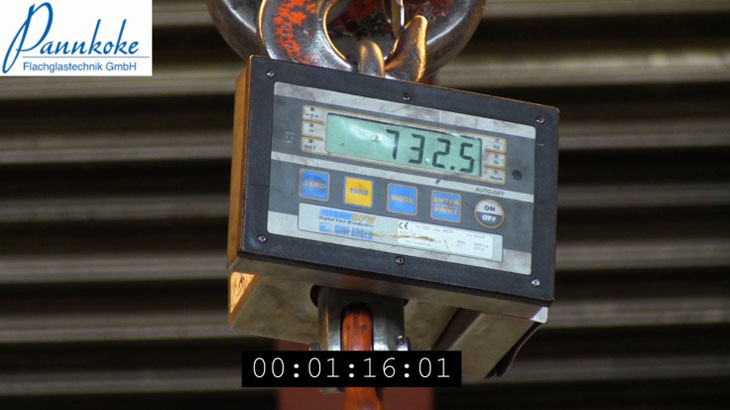
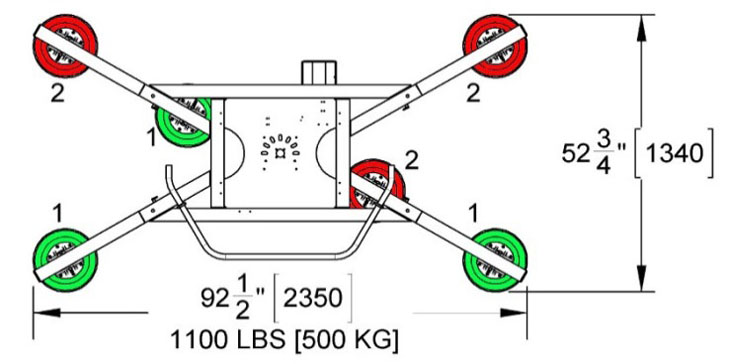 | In this configuration, 500 kg should be able to be moved. This means that a vacuum circuit must be able to hold 1000 kg. This is hardly achieved even at the beginning. It starts at approx. 860 kg and then drops to 730 kg within 1 minute and continues to fall. The test was cancelled after this time. |
 |  |
 |
Horizontal load case
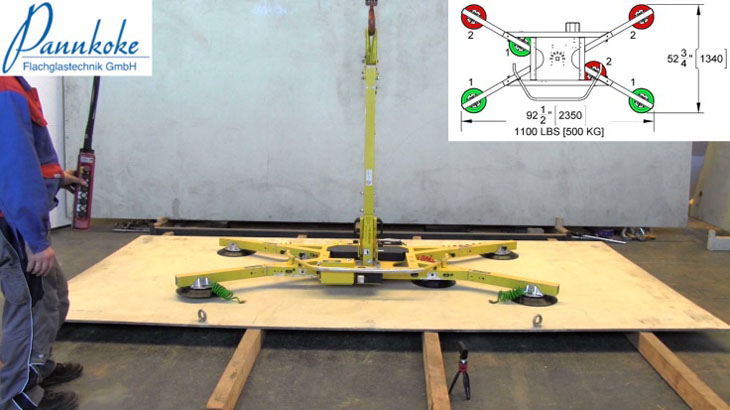
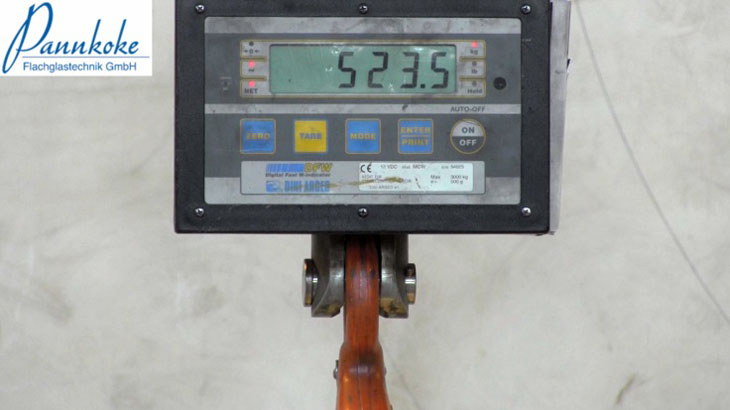
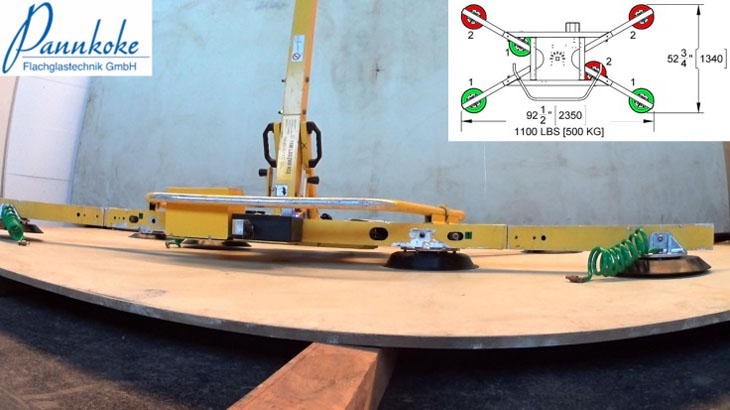
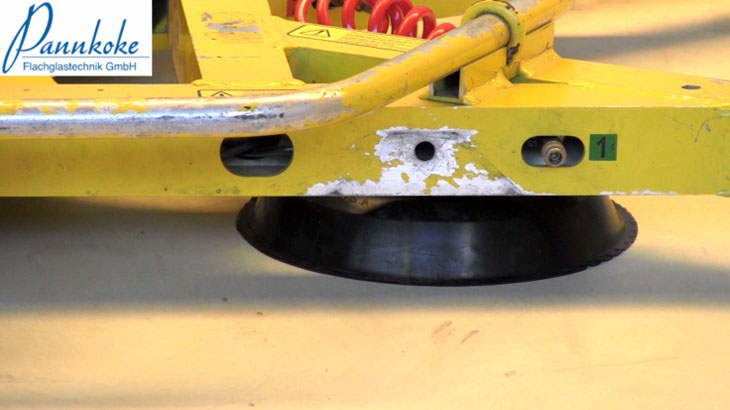
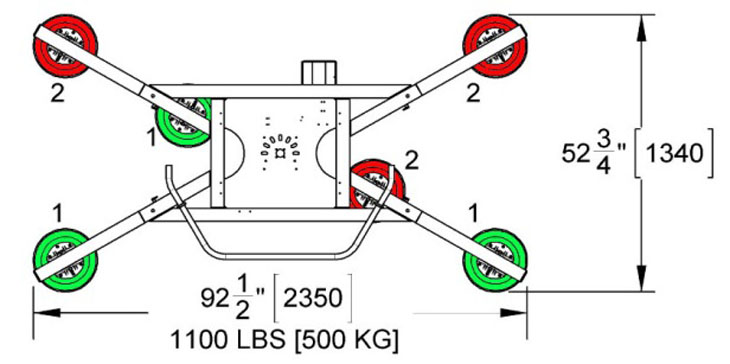 | In this configuration, 500 kg should be able to be moved. This means that a vacuum circuit must be able to hold 1000 kg. At approx. 520 kg, the condition of the suction cups is very precarious. Any further load would cause the suction cups to break. The required 1000 kg were not even close to being reached. |
 |  |
 |  |
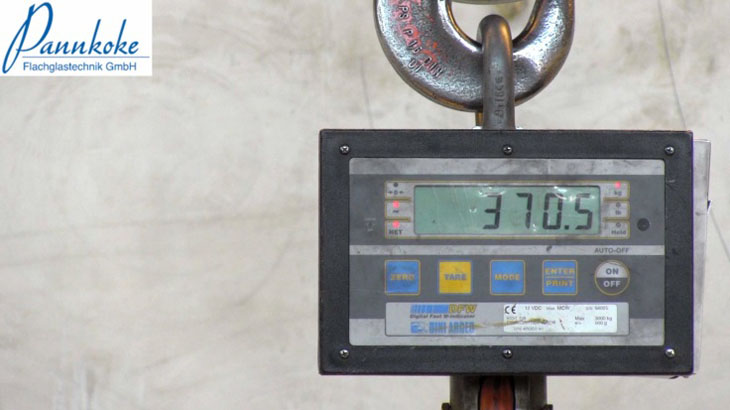
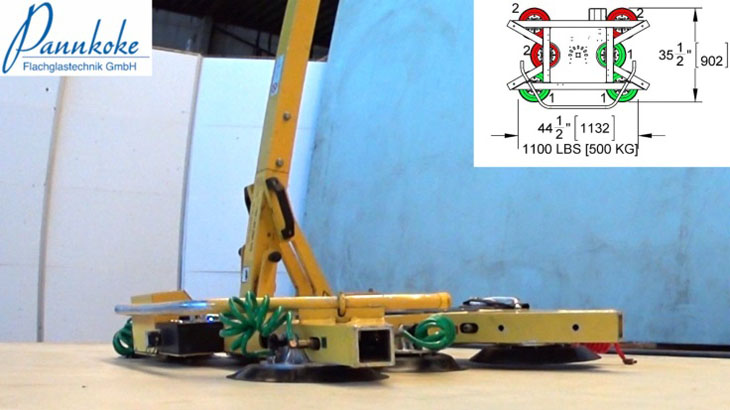
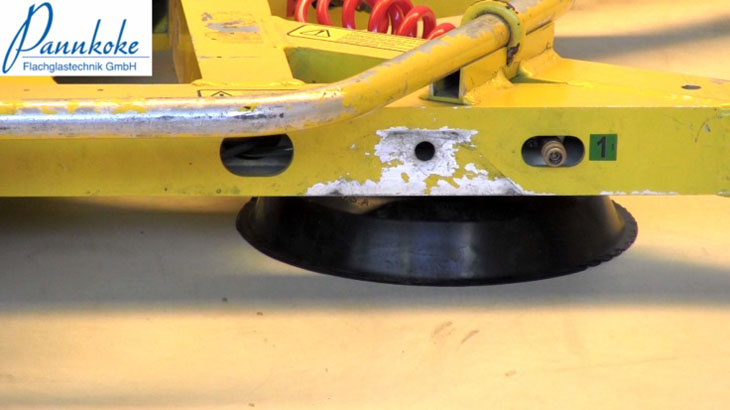
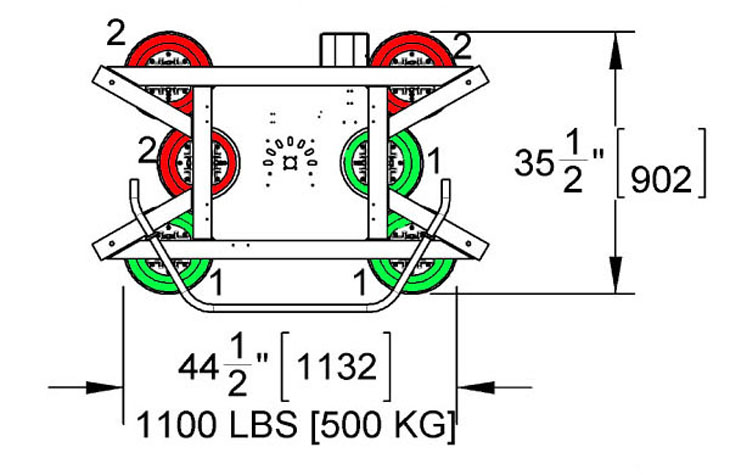 | In this configuration, 500 kg should be able to be moved. This means that a vacuum circuit must be able to hold 1000 kg. At approx. 370 kg, the condition of the suction cups is very precarious. Any further load would cause the suction cups to break. The required 1000 kg were not even close to being reached. |
 |  |
 |  |
There are also corresponding videos documenting these tests. So everyone can see how we carried out these tests. Here are the links: https://www.youtube.com/embed/GIQRIIQmhLg?feature=oembed https://www.youtube.com/embed/ROu3ltsFxRU?feature=oembed https://www.youtube.com/embed/1T9rdW666_U?feature=oembed
Our advice
Always try to distribute the suction cups from each vacuum circuit evenly over the surface. Never change the suction cup arrangement in any way other than specified by the manufacturer. The manufacturer must know how to safely design the appliance in accordance with EU standard EN 13155.
If you wish, we can offer you appropriate training on this topic. It is better to think about it beforehand than to look for an explanation for the accident afterwards.
It's about your safety and that of your fellow human beings.